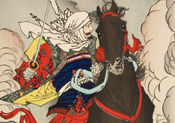
 | Ellis Amdur is an internationally recognized authority on traditional Japanese martial arts. He has written five books (and also released one DVD) on this subject, each of which has been considered groundbreaking: Dueling with O-sensei, Old School, Hidden in Plain Sight, The Phenomenologist and Roots Still Cracking Rock. |
 | Drawing on his experiences both in his profession and in a rather colorful life, Amdur has also entered the world of fiction, with his graphic novel, Cimarronin (co-authored with Neal Stephenson, Charles Mann and Mark Teppo), and three novels, The Girl with the Face of the Moon, Lost Boy, and Little Bird & The Tiger. |
 | In his Advanced Tactical Communication Series Amdur focuses on enhancing skills in establishing respect and rapport, while maintaining power and integrity, even with people from different cultures or environments. The Coordinator is for warfighters,& police or correctional officers. The Accord Agent is for those in any worksite where adversarial relationships have to be worked out to everyone’s benefit, and The Good Stranger is written for all those in social services. |
 | Ellis Amdur is also a distinguished expert in the field of crisis intervention. He has published twelve profession-specific books and one online course on the verbal de-escalation of aggression and calming of agitated mentally ill people, all of which are listed on this website. |
 | Crisis negotiation is one of the most remarkable areas of law enforcement. Amdur has published two books, co-written with Ret. Sergeant Lisabeth Eddy, entitled Shapeshifting, one for law enforcement HNT/CNT and the second for corrections HNT/CNT. Both books concern scenario training for crisis/hostage negotiators. |
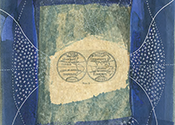 | Body and Soul is an unusual combination of lyric philosophical writing and harsh humanity, reeking, at times, of flesh and pain, yet finding, at other moments, traces of beauty, kindness, even love. . . . A person's integrity and unassailable dignity is to be found in stark moments where two people receive the ultimate in human gifts: the realization that we are always two, not one, and therefore, never alone. |
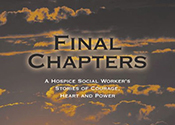 | Woven into these stories—case accounts by hospice social worker, Evelyn Amdur—are instructions on how to die well—or at least, as well as we can—not only in what spirit we face death itself, but also through instructions on what is necessary to prepare all who may be involved in our deaths. Finally, these stories also teach others who hold the same responsibilities that Evelyn herself had, be they social services, medical staff, caregivers or families—how to offer the dying as much grace as she did. |